
Find A Doctor
Endonasal cranial adjusting

What Is The Nasal Release Technique?

The short answer

The nasal release technique is another name for endonasal cranial adjusting, known today as Cranial Facial Release (CFR) and rooted in the older Bilateral Nasal Specific (BNS) method. A trained provider briefly inflates tiny balloons inside the nasal passages to mobilize the bones of the face and skull, aiming to open the breathing passages and restore cranial mobility.

Endonasal cranial adjusting Cranial Facial Release (CFR) Bilateral Nasal Specific (BNS) Cranial ballooning
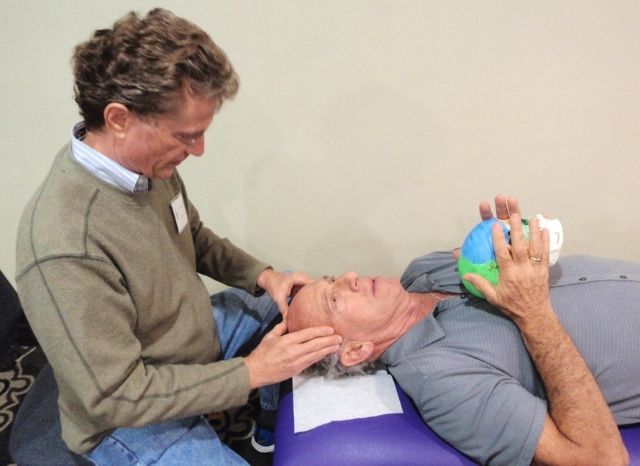
A CFR practitioner performing the nasal release technique on a patient at a seminar, model skull in hand
Nasal release vs. CFR

What People Mean By “Nasal Release Technique”

If you’ve searched for a “nasal release technique” provider, you’re almost certainly looking for the same family of work that goes by several names. Here’s how the terms relate.

It’s A General Term

“Nasal release technique” is a plain-language description people use for the balloon-assisted, through-the-nose approach to releasing the cranial bones. It isn’t a single trademarked method; it’s the category.

Closely related names you may see include endonasal cranial adjusting, cranial ballooning, and Bilateral Nasal Specific (BNS), the original technique developed by chiropractor Dr. Richard Stober in the 1960s and 70s.

CFR Is The Refined Form

Cranial Facial Release (CFR) is the specific, modernized version of this work, refined by Dr. Adam Del Torto from the original BNS method to be more precise in its targeting and gentler for the patient.

So in practice, most providers offering a “nasal release” are performing CFR or a closely related endonasal technique. Learn more about CFR →

The balloon mechanism

How Does The Nasal Release Technique Work?

The intent behind the technique is to open the breathing passages and induce mobility in the cranial system (particularly the sphenoid bone) with the aim of supporting normal cerebral spinal fluid flow. Here is what a session typically involves.

1

Assessment

A trained provider reviews your history and concerns to determine whether the endonasal approach is appropriate for you.

2

Gentle Placement

Small finger-cot balloons are carefully placed into the nasal passages, reaching back toward the naso-pharynx.

3

Brief Inflation

The balloons are quickly inflated for only a few seconds (the “release”), which is intended to mobilize the bones of the face and cranium.

4

A Short Series

Treatment is usually pursued as a short series of sessions rather than a single visit, with your provider guiding the cadence.

The mechanism described here reflects the theory and intent behind the technique: how it is meant to work. It is often pursued by patients as a non-surgical option to explore, frequently after more conventional approaches have been tried. For a deeper look at the technique and the sphenoid bone it targets, see What Is CFR.
Reported applications

What Conditions Respond Favorably To The Nasal Release Technique?

Because it centers on the breathing passages and cranial mobility, the technique has been used to help with a range of breathing-related, structural, and neurological concerns. Patients have reported improvement in conditions such as those below. Explore each on the conditions hub.

Individual results vary. CFR is not a guaranteed cure and is not a substitute for medical advice. Consult a qualified provider. The applications listed reflect concerns that patients and practitioners have explored with the technique; they are not promises of outcome.
Provider directory

Find A CFR Provider Near You

The nasal release technique requires specific, hands-on training, so it’s best performed by a certified provider, not attempted on your own.

Our directory lists trained CFR doctors across the United States and internationally. If you’re searching for a “nasal release technique near me,” the directory is the fastest way to find a certified practitioner in your area and reach out directly.

  • Certified, trained CFR providers
  • Locations across the U.S. and abroad
  • Contact a provider directly to ask questions
Nasal release technique FAQ

Frequently Asked Questions

Is The Nasal Release Technique The Same As Cranial Facial Release?

Largely, yes. “Nasal release technique” is a general term for the balloon-assisted endonasal approach. Cranial Facial Release (CFR) is the specific, refined form of that technique, developed by Dr. Adam Del Torto from the original Bilateral Nasal Specific (BNS) work. Most providers offering a nasal release are practicing CFR or a closely related endonasal method.

Does The Nasal Release Technique Hurt?

Experiences vary from person to person. The inflation lasts only a few seconds, and many patients describe a strong but brief sensation of pressure rather than sharp pain. A trained provider will walk you through what to expect and answer your questions before beginning.

How Do I Find A Nasal Release Technique Provider Near Me?

Because the technique requires specific training, it’s best performed by a certified CFR provider. Start with our Recommended CFR Doctors, or locate any trained doctor in your area using our Find A Doctor directory, which lists certified practitioners across the U.S. and internationally.

Find A Certified CFR Provider Near You

The nasal release technique is performed by trained, certified doctors worldwide. Locate a provider in your area to ask your questions. Or, if you’re a licensed DC, learn the technique at an upcoming seminar.