
Days In A Series
A standard CFR series runs over four consecutive days. Treating on back-to-back days is intended to build on the prior day's mobilization.
When symptoms linger long after a head injury, some patients look beyond conventional care. Cranial Facial Release is a non-surgical, endonasal cranial adjusting technique that aims to address restricted cranial mobility associated with persistent post-concussion symptoms.
CFR is a non-surgical technique some head-injury patients explore when symptoms persist after standard treatment. Practitioners link lingering symptoms to cranial restrictions, and CFR aims to restore cranial mobility. It is not a guaranteed cure, results vary, and it does not replace medical evaluation.
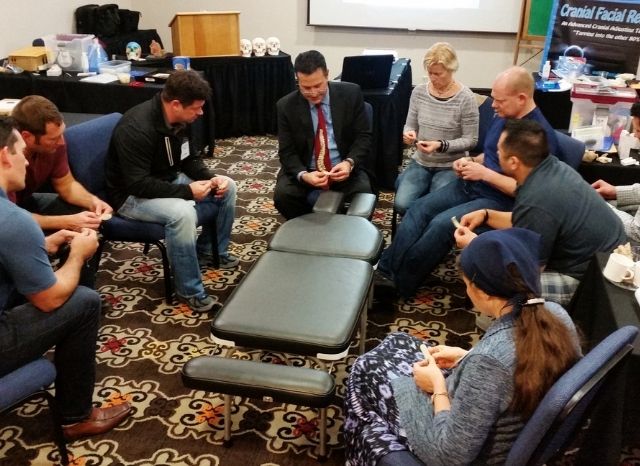
An honest look at the mechanism, framed as the intent behind the technique, not a promise of outcome.
Post-concussion syndrome describes a cluster of symptoms (headaches, brain fog, dizziness, fatigue, light or sound sensitivity) that can persist for weeks or months after a concussion or other head trauma. For many people these symptoms resolve with rest and conventional care. For some, they linger.
CFR practitioners work from a structural premise: that head trauma can leave the bones of the cranium subtly restricted in their natural micro-movement. The theory holds that these restrictions may interfere with normal cranial mechanics and the free flow of cerebrospinal fluid. By gently introducing controlled pressure through the nasal passages, CFR aims to mobilize the cranial bones and restore that natural mobility.
This is the intent of the technique, not a guaranteed result. CFR is best understood as a non-surgical option that some patients explore, frequently as a last resort after conventional treatment has not fully resolved their symptoms. It should be considered alongside, never in place of, evaluation by a qualified medical provider.
CFR is delivered in short, structured sessions. Here is how a typical course is organized. Your provider tailors the details to you.
A standard CFR series runs over four consecutive days. Treating on back-to-back days is intended to build on the prior day's mobilization.
Many patients complete three to four series over time. Your provider gauges progress and recommends how many series may be appropriate.
The actual endonasal release takes only seconds. A small balloon is briefly inflated in the nasal passage to mobilize the cranial bones.
CFR is non-surgical and non-invasive. There is no incision and no anesthesia. Most patients return to their day afterward.
CFR is a non-surgical technique that some people with lingering post-concussion symptoms explore, often after conventional care has not fully resolved their symptoms. Practitioners associate persistent symptoms with restricted cranial mobility, and CFR aims to address those restrictions. It is not a guaranteed cure, results vary from person to person, and it is not a substitute for medical evaluation.
CFR is not a cure and makes no guarantee of recovery. It is a manual technique that aims to restore cranial mobility. Anyone who has sustained a head injury should first be evaluated by a qualified medical provider. CFR is one option some patients consider alongside, not in place of, appropriate medical care.
A CFR series is typically delivered over four consecutive days, and many patients complete three to four series over time. The endonasal release itself takes only seconds. Your CFR provider determines the right approach for your situation.
If conventional care has not fully relieved your post-concussion symptoms and you would like to learn whether CFR is a reasonable option for you, the best first step is a conversation with a certified provider who can assess your situation honestly.