Persistent jaw pain, clicking, and limited movement can wear on every part of your day. Cranial Facial Release (CFR) is a gentle, non-surgical technique that some people with TMJ disorder explore, often after conventional care hasn't brought the relief they were looking for.
CFR is an endonasal, balloon-assisted technique that gently mobilizes the bones of the face and cranium around the jaw joint. It is not a guaranteed cure, but some people with TMJ disorder explore it as a non-surgical option, and patients have reported improvement in jaw comfort and mobility. Individual results vary.
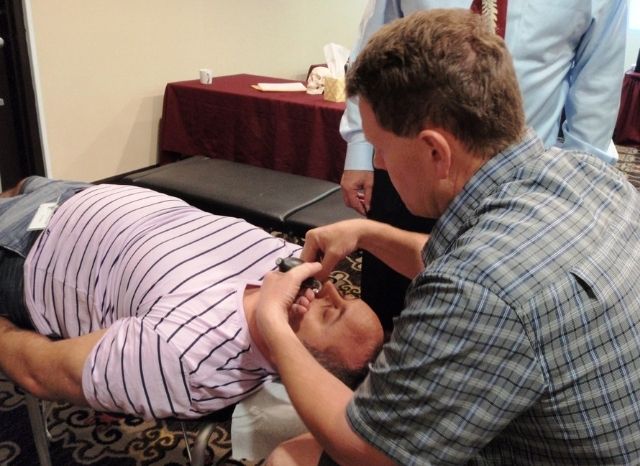
The temporomandibular joint doesn't work in isolation. It sits within a network of facial and cranial bones, and CFR is built around the idea that gently restoring motion to those bones may ease the mechanics around the joint.
CFR is an advanced endonasal, balloon-assisted cranial adjusting technique. A small balloon is briefly inflated in the breathing passages of the nose to mobilize the bones of the face and cranium, including the structures that surround the temporomandibular joint.
The theory practitioners work from is this: by opening the breathing passages and restoring subtle cranial mobility, CFR aims to reduce mechanical tension in the tissues around the jaw and support more balanced jaw movement. This is the intent of the technique: a mechanism providers associate with reduced tension and improved jaw mechanics, not a promise of any particular result.
Because it is non-invasive and doesn't involve surgery or medication, CFR is often pursued as a last resort some patients explore after more conventional approaches haven't given them the relief they hoped for.
CFR is typically delivered as a short series of visits over consecutive days. The release itself is quick (the balloon inflation lasts only seconds), and the technique is non-surgical from start to finish.
Your provider reviews your history and jaw concerns, then performs the first endonasal release. The balloon is inflated for only a few seconds per passage.
A second release on the following day continues to mobilize the cranial and facial bones, allowing the tissues to respond gradually rather than all at once.
Your provider checks how your jaw is responding and tailors the release. Many patients begin noticing changes in comfort or mobility around this point, though this varies.
The fourth visit completes a single series of four consecutive days. Your provider will discuss whether further series may be worth considering.
CFR gently mobilizes the bones of the face and cranium that surround the jaw joint. It is not a guaranteed cure, but some people with TMJ disorder explore it as a non-surgical option, often after conventional care hasn't given them the relief they hoped for. Patients have reported improvement in jaw comfort and mobility, though individual results vary.
Practitioners aim to restore subtle motion to the cranial and facial bones around the temporomandibular joint. By mobilizing these structures, the technique is intended to reduce mechanical tension in the surrounding tissues and support more balanced jaw mechanics. This is the theory the technique is built on, not a promise of any specific outcome.
No. CFR is not a substitute for medical or dental advice. Jaw pain can have many underlying causes, so you should consult a qualified provider for diagnosis and care. Many people consider CFR alongside conventional treatment, not instead of it.
If you've been living with TMJ discomfort and want to understand whether CFR might be worth exploring, the next step is a conversation with a certified provider. Find one near you and ask your questions directly.