Cranial Facial Release (CFR) is a non-surgical, balloon-assisted technique that some people with Bell’s palsy or facial paralysis explore, often as a last resort after conventional treatment has not fully resolved their symptoms. It aims to mobilize the cranial and facial bones surrounding the facial nerve pathways. Individual results vary, and CFR is not a guaranteed cure.
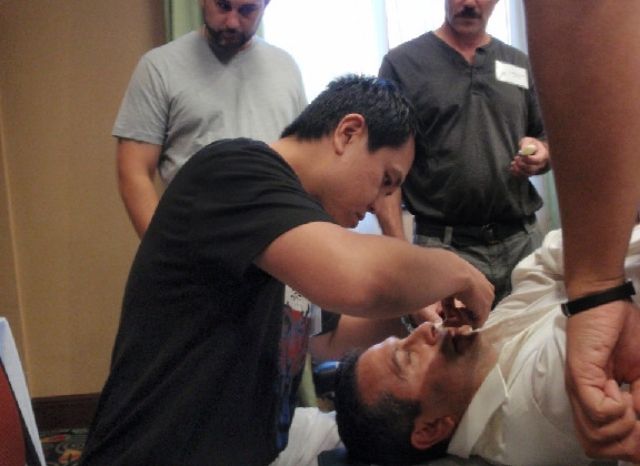
In Bell’s palsy, the facial nerve (which controls the muscles of expression on one side of the face) becomes inflamed or compressed, leaving part of the face weak or unable to move.
The facial nerve travels through a narrow bony canal inside the skull before branching out across the face. CFR practitioners work from the theory that the cranial and facial bones surrounding these pathways can lose their normal subtle motion. By inflating small balloons inside the nasal passages, CFR gently mobilizes the cranial system to open the breathing passages and restore cranial mobility, which practitioners associate with improved function in some facial-paralysis cases.
This is the mechanism practitioners work from: an intent, not a promise. CFR does not claim to repair or regenerate the facial nerve, and how a person responds depends entirely on their individual situation. It is best understood as one option to consider alongside, not instead of, appropriate medical care.
CFR is non-surgical and performed in a provider’s office. The release itself takes only seconds, though the technique is delivered as a structured series rather than a single visit. Here is how a typical course is organized.
A single CFR series is generally performed over four consecutive days, allowing the practitioner to work with the cranial system progressively rather than all at once.
Practitioners commonly recommend three to four series spaced out over time. The right number for any individual is determined by a certified provider after assessing your situation.
The actual adjustment (inflating a small balloon in the nasal passage to mobilize the cranial system) takes only seconds. Most of the appointment is assessment and preparation.
CFR is a manual, in-office technique. There is no surgery and no general anesthesia involved, which is part of why some people explore it as a last resort.
CFR has been used by some people with Bell’s palsy or facial paralysis as a non-surgical option to explore, often after conventional treatment has not fully resolved their symptoms. It aims to mobilize the cranial and facial bones surrounding the facial nerve pathways. It is not a guaranteed cure, individual results vary, and it is not a substitute for medical advice.
A CFR series is usually performed over four consecutive days, and practitioners commonly recommend three to four series spaced over time. The release itself takes only seconds. The right number for you is determined by a certified provider after assessing your situation.
No. CFR is not a substitute for medical care. It is a non-surgical option some patients explore alongside, not instead of, appropriate medical evaluation and treatment. Always consult a qualified provider about a facial-paralysis diagnosis before pursuing any new approach.
If you’re considering Cranial Facial Release for Bell’s palsy or facial paralysis, the next step is an honest conversation with a trained, certified provider who can assess your situation. Locate a doctor in your area, or learn more about how the technique works first.