Cranial Facial Release (CFR) is a non-surgical, balloon-assisted endonasal technique that some chronic-migraine and headache sufferers explore, often as a last resort after conventional treatment has fallen short. By mobilizing the cranial bones, CFR aims to relieve restrictions some practitioners associate with recurring headaches. Some patients report improvement; results are not guaranteed.
If migraines have followed you for years and the usual options have run out, CFR is one more avenue worth understanding. This page explains how the technique is intended to work, what a course of care actually looks like, and how to find a certified provider near you.
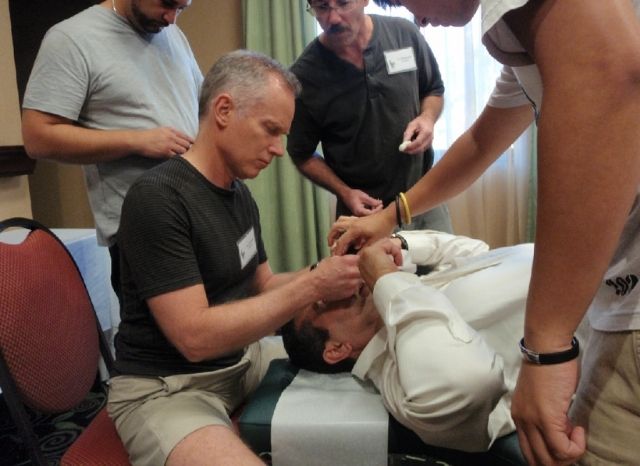
What follows describes the intent behind the technique, the theory practitioners work from, not a promised result.
The premise is structural: that the bones of the skull are meant to have subtle movement, and that lost mobility can play a role in chronic head pain.
By gently mobilizing the cranial bones, with particular attention to the sphenoid (the central bone the rest of the skull articulates around), CFR aims to restore that natural give. A practitioner briefly inflates small balloons inside the nasal passages to encourage this movement.
In theory, freeing these restrictions and improving the flow of cerebral spinal fluid may ease the cranial tension some practitioners associate with recurring migraines. This is the rationale CFR is built on; whether it helps a given person varies, and CFR is not a substitute for diagnosis and care from a physician.
The technique targets the sphenoid and surrounding bones, the structures the skull pivots around.
Inflating the balloons aims to open the nasal and cranial passages and restore normal mobility.
The intent is to encourage normal cerebral spinal fluid flow, which the theory links to relief.
No incisions, no medication. Many patients explore CFR after conventional routes have not worked.
CFR is typically delivered as a short, structured series rather than a single visit. Here is the usual shape. Your provider will tailor it to you.
The adjustment itself is fast. A provider briefly inserts and inflates small balloons in the nasal passages, then removes them. The release happens in a matter of seconds.
A single series is generally performed over four consecutive days, allowing the cranial system time to respond between sessions.
Most people pursue three to four series in total, spaced out over time. Your provider will recommend a cadence based on how you respond.
CFR involves no incisions and no medication. It is a hands-on, structural technique, which is part of why some migraine sufferers explore it when they want to avoid more invasive options.
Some patients have reported improvement; others may notice little change. There is no guaranteed outcome, and a certified provider can give you an honest read after evaluating your situation.
No. CFR is not a guaranteed cure for migraines. It is a non-surgical technique that some chronic-headache sufferers explore, often as a last resort after conventional care has fallen short. Some patients report relief, while others may not respond. Individual results vary, and you should consult a qualified provider about your specific situation.
In theory, by mobilizing the cranial bones (especially the sphenoid) and improving cerebral spinal fluid flow, CFR aims to relieve the cranial restrictions some practitioners associate with chronic migraines. This describes the intent of the technique, not a promised outcome.
The release itself takes only seconds per session. CFR is non-surgical and is typically delivered as a series of four daily sessions, with most people pursuing three to four series. Briefly inserting and inflating the balloons can feel pressured for a moment, but the procedure is quick. A certified provider can explain exactly what to expect for you.
Individual results vary. CFR is not a guaranteed cure and is not a substitute for medical advice. Consult a qualified provider.
If conventional options for your migraines have come up short, talk to a certified CFR provider. They can evaluate your situation, explain what to expect, and give you a straight answer about whether the technique is worth pursuing for you.